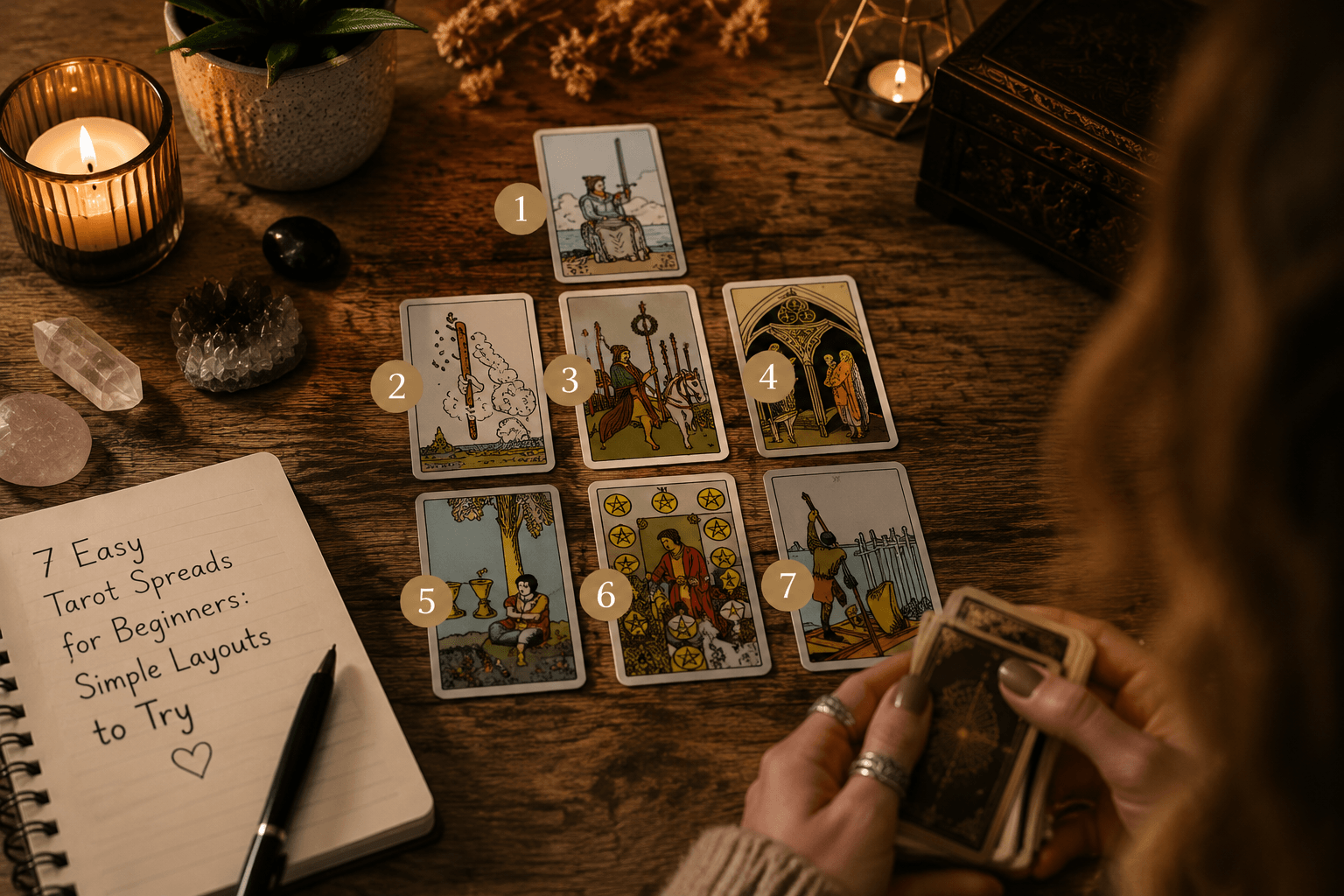
7 Easy Tarot Spreads for Beginners: Simple Layouts to Try
Introduction
Tarot spreads are simple card layouts that help you explore a question in an organized way.
You do not need a large or complicated spread to have a meaningful reading. In fact, beginners often learn faster by starting with one card or three cards at a time.
A spread gives each card a role. Instead of drawing several cards and wondering how they connect, you can assign a clear purpose to every position.
For example, one card may represent the situation, another the challenge, and another a helpful perspective.
This guide shares seven easy tarot spreads for beginners. Use them as reflection tools, not as guaranteed predictions. The goal is to think more clearly, notice patterns, and identify practical next steps.
How to Prepare for a Tarot Spread
Before you begin, choose a quiet place where you can focus for a few minutes.
You only need:
- Your tarot deck
- A question or topic
- A flat surface
- A notebook, if you want to write down your thoughts
Take a moment to decide what you would like to explore. Open questions usually work better than questions that demand a fixed yes-or-no answer.
Instead of asking:
- “Will this happen?”
- “What will they do?”
- “What is my future?”
Try asking:
- “What should I understand about this situation?”
- “What perspective would help me most?”
- “What can I do next?”
- “What am I not seeing clearly?”
Once you have your question, shuffle your cards and draw the number needed for the spread.
1. The One-Card Daily Tarot Spread
The one-card spread is the simplest possible tarot layout. It is ideal for beginners and works well as a daily reflection practice.
How to Use It
Ask a broad question, such as:
- “What should I keep in mind today?”
- “What energy can I bring to my day?”
- “What would help me stay grounded?”
Draw one card.
Look at the image before checking a guidebook. Notice the colors, symbols, mood, and first thoughts that come to you.
Then consider how the card’s traditional meaning might connect with your day.
Why It Helps
A one-card reading is short enough to become a regular habit. It also helps you learn individual card meanings without feeling overwhelmed.
2. Past, Present, Future Spread
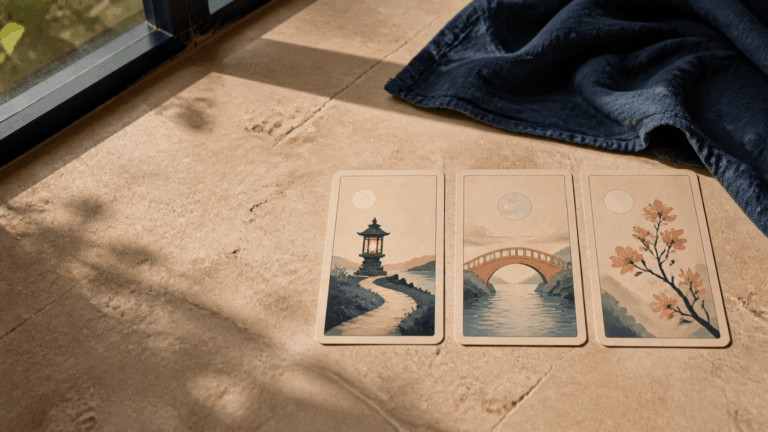
This classic three-card spread is one of the easiest ways to look at a situation over time.
Lay three cards from left to right.
- Past influence
- Present situation
- Possible direction
The third card should not be treated as a fixed future prediction. Instead, read it as a potential theme, direction, or area to consider based on your current path.
Best For
- Reviewing a recent change
- Reflecting on a relationship
- Understanding a personal goal
- Looking at the bigger picture
3. Situation, Challenge, Guidance Spread
This three-card layout is useful when you feel uncertain or stuck.
Lay three cards in a row.
- What is happening now?
- What is making this difficult?
- What could help?
The guidance card does not need to give a dramatic answer. It may point toward patience, clearer communication, practical planning, rest, or a new perspective.
Best For
- A difficult decision
- A work challenge
- Creative block
- Feeling overwhelmed
- A situation you keep overthinking
4. Mind, Heart, Action Spread
This spread helps you separate thoughts, emotions, and practical next steps.
Lay three cards from left to right.
- Mind: What am I thinking?
- Heart: What am I feeling?
- Action: What can I do?
Sometimes your thoughts and feelings may not be aligned. For example, you may think you are ready for a change while emotionally feeling uncertain.
This spread can help you notice that difference without judging yourself.
Best For
- Personal reflection
- Relationship questions
- A choice between two paths
- Understanding mixed emotions
5. The Weekly Check-In Spread
This simple four-card spread is useful at the beginning of a new week.
Lay four cards in a square or a line.
- What should I focus on this week?
- What may challenge me?
- What support is available to me?
- What mindset would help?
This layout is practical because it does not ask tarot to predict every event. Instead, it encourages intentional planning and self-awareness.
You can write down your cards on Monday and reflect on them again at the end of the week.
6. The Relationship Reflection Spread
This spread is designed to help you reflect on a relationship dynamic. It can be used for a romantic relationship, friendship, family connection, or work partnership.
Lay four cards in a row.
- My perspective
- The other person’s possible perspective
- The energy between us
- A constructive next step
The second card should not be treated as proof of what another person secretly thinks or feels. Use it as a prompt to consider perspectives you may not have explored.
A healthy reading should encourage communication, boundaries, and empathy rather than assumptions.
Best For
- A friendship that feels distant
- A communication issue
- Relationship reflection
- Understanding your own expectations
7. The Decision-Making Spread
When you are comparing options, this five-card layout can help you organize your thoughts.
Lay five cards in a row.
- What matters most in this decision?
- What may support option A?
- What may challenge option A?
- What may support option B?
- What should I remember before deciding?
This spread does not make the decision for you. It helps you identify questions, feelings, and practical factors that deserve more attention.
For major financial, legal, health, or safety decisions, use professional guidance and reliable information in addition to any tarot reflection.
How to Interpret a Tarot Spread
After drawing your cards, avoid rushing to one fixed answer.
Try this process:
Look at the Whole Story
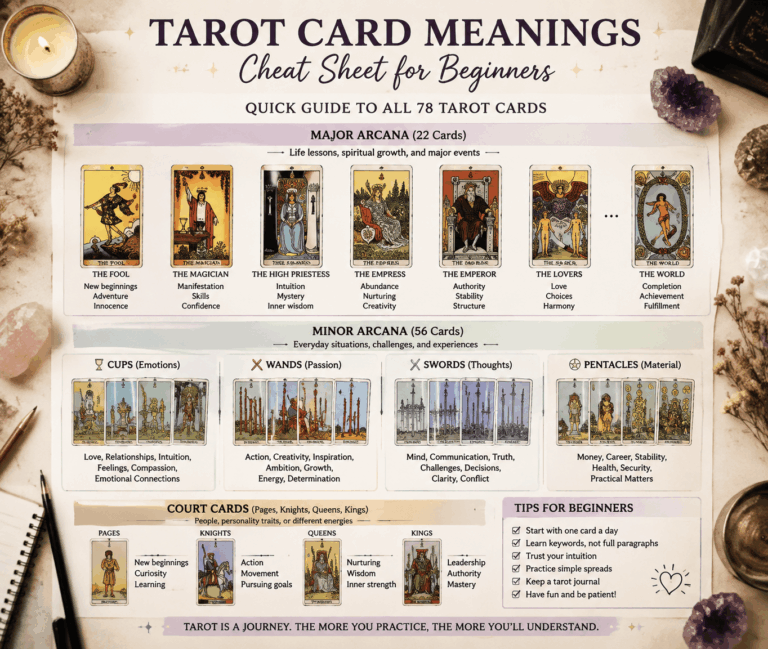
Notice whether certain suits repeat.
For example:
- Several Cups may point toward emotions or relationships.
- Several Swords may suggest a lot of thought, communication, or tension.
- Several Pentacles may bring attention to practical matters.
- Several Wands may relate to energy, motivation, or creativity.
Notice the Card Positions
A card’s meaning changes depending on its position.
The Tower in a “challenge” position may feel different from the Tower in a “what I need to release” position.
Always read the card together with the question and the role it has in the spread.
Keep Your Reading Grounded
End by asking:
- What did this spread help me notice?
- What question should I explore further?
- What is one realistic action I can take?
- What support might I need?
Tarot is often most useful when it moves you toward reflection and practical action.
Tips for Beginners
Start Small
You do not need to use seven-card or ten-card spreads immediately. One- and three-card layouts are enough to build confidence.
Write Down Your Readings
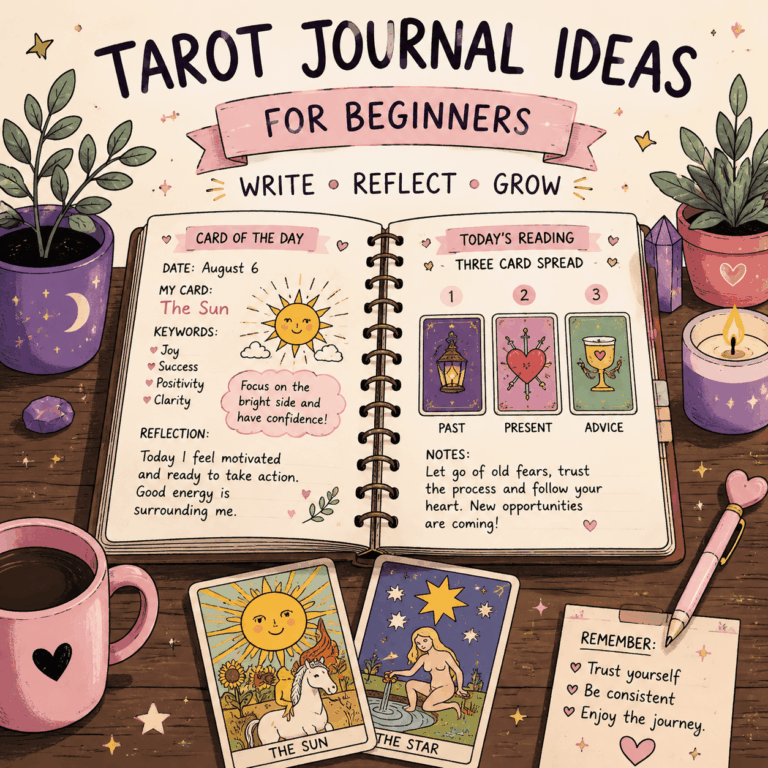
Keeping a tarot journal helps you learn card meanings and notice how your interpretations change over time.
Do Not Repeat the Same Spread Again and Again
If you do not like the first result, it can be tempting to shuffle and ask again. This often creates more confusion.
Give yourself time to reflect before returning to the same question.
Use a Guidebook, but Trust Your Observation
Traditional meanings are useful, especially while learning. However, your first response to the artwork also matters.
Tarot reading is a balance between learning the symbolism and noticing your own thoughts.
Final Thoughts
Tarot spreads give structure to a reading and make it easier to explore a question without becoming overwhelmed.
Begin with one card or a simple three-card layout. As you become more comfortable, try weekly, relationship, and decision-making spreads.
The goal is not to find a guaranteed answer. A good spread can help you pause, organize your thoughts, and approach a situation with more awareness.
Frequently Asked Questions
What is the easiest tarot spread for beginners?
A one-card spread is the easiest starting point. A three-card Situation, Challenge, Guidance spread is a helpful next step.
How many cards should beginners pull?
Start with one to three cards. Larger spreads can become confusing until you feel comfortable with individual card meanings.
Can I create my own tarot spread?
Yes. You can create a spread around any reflective question, as long as each card position has a clear purpose.
Should I use reversed cards in a spread?
You can, but you do not have to. Many beginners learn upright card meanings first and add reversed cards later.
How often should I do tarot spreads?
There is no fixed rule. A daily one-card draw or a weekly spread can be a simple, balanced practice.