How to Read Tarot Cards: A Step-by-Step Guide for Beginners
Introduction
Learning how to read tarot cards can seem intimidating at first. A tarot deck has 78 cards, each with its own imagery, history, and traditional symbolism. Yet you do not need to memorize every meaning before you begin.
Tarot is often most useful as a reflective practice. It can help you slow down, explore a question, notice your thoughts, and consider a situation from another angle.
A good tarot reading does not need to predict the future with certainty. Instead, it can offer symbols and prompts that help you think more clearly about your choices, feelings, and next steps.
This step-by-step guide explains how beginners can start reading tarot cards in a calm, practical way.
What You Need to Start Reading Tarot
You only need a few things to begin:
- A tarot deck
- A quiet place to focus
- A question or topic to explore
- A notebook, if you want to record your thoughts
You do not need expensive accessories, special rituals, or perfect intuition.
Many beginners choose a deck with clear artwork and a guidebook. The Rider–Waite–Smith tradition is commonly used in tarot resources because many modern decks and interpretations are based on its familiar symbols.
Choose a deck that feels visually interesting and easy for you to understand.
Understand the Basic Structure of a Tarot Deck
Before drawing cards, it helps to know the deck’s two main sections.
Major Arcana
The Major Arcana contains 22 cards. These cards often explore larger life themes, turning points, personal growth, and important lessons.
Examples include:
- The Fool
- The Magician
- The Lovers
- The Hermit
- The Star
- The World
When a Major Arcana card appears, some readers see it as an invitation to pay attention to a broader theme in the situation.
Minor Arcana
The Minor Arcana contains 56 cards and focuses more on everyday experiences.
It has four suits:
- Wands: energy, creativity, motivation, action
- Cups: emotions, connection, relationships
- Swords: thoughts, communication, decisions
- Pentacles: work, routines, resources, practical matters
Each suit has cards numbered from Ace to Ten, along with four court cards: Page, Knight, Queen, and King.
For a fuller explanation of individual cards, you can link this article to your Tarot Card Meanings: A Complete Beginner’s Guide to the 78 Cards page.
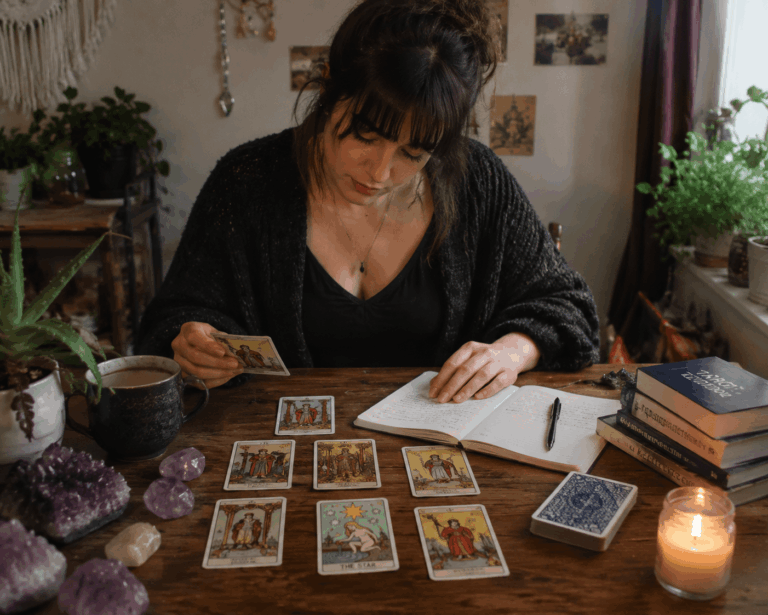
Step 1: Create a Comfortable Reading Space
You do not need a dramatic or elaborate setup. The goal is simply to reduce distractions.
Choose a quiet place where you can sit comfortably for a few minutes. You may prefer soft natural light, a clear surface, or a place where you can keep your cards together.
Some people enjoy lighting a candle or playing calm music, but these are optional. Tarot can be read at a kitchen table, on a sofa, in a park, or anywhere you can focus.
The most important part is your attention.
Step 2: Ask an Open-Ended Question
The quality of your question can shape the quality of your reflection.
Tarot questions work best when they invite insight rather than demand a fixed prediction.
Instead of asking:
- “Will I get the job?”
- “Will this relationship last?”
- “What will happen next?”
Try asking:
- “What should I understand about this opportunity?”
- “What can I bring to this relationship?”
- “What perspective am I missing?”
- “What would help me approach this decision more clearly?”
- “What can I learn from this situation?”
Open questions give you more room to think, reflect, and notice useful patterns.
Step 3: Shuffle the Cards
There is no one correct way to shuffle tarot cards.
You can shuffle them like regular playing cards, mix them face-down on a table, or use any method that feels comfortable.
As you shuffle, keep your question or topic in mind. You do not need to force a certain feeling or wait for a dramatic sign. Simply take a moment to focus.
When you feel ready, stop shuffling and draw a card.
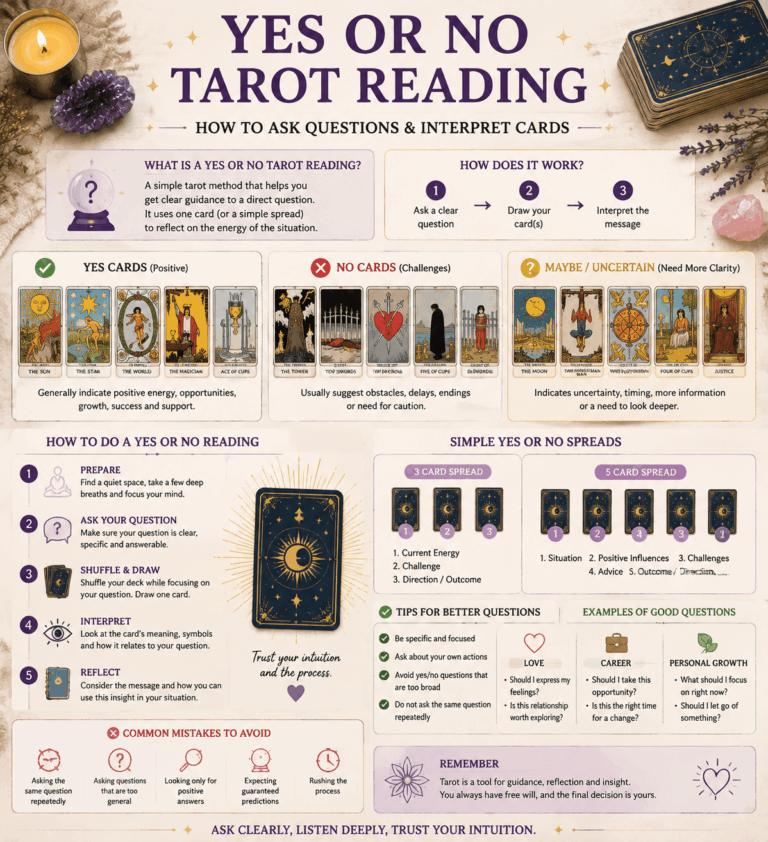
Step 4: Start With a One-Card Reading
A one-card reading is one of the best ways to learn tarot.
It is simple, quick, and less overwhelming than trying a large spread immediately.
Ask a question, draw one card, and consider:
- What do I notice in the image?
- What emotion does the card create?
- What traditional meaning is associated with this card?
- How could this theme connect to my question?
- What practical action or reflection might follow?
For example, if you draw the Hermit while thinking about a difficult decision, you might consider whether you need more quiet time, research, or distance from other people’s opinions.
The goal is not to find a perfect answer. It is to develop a thoughtful relationship with the card’s symbolism.
Step 5: Look at the Image Before Reading the Guidebook
Before checking a card’s traditional meaning, spend a minute looking at the artwork.
Notice:
- Colors
- Expressions
- Objects
- Animals
- Weather
- Direction of movement
- The overall mood
Ask yourself what story the image seems to tell.
Your first reaction may reveal something personal about the question you asked. Then, read the guidebook meaning and compare it with your own interpretation.
Over time, this practice helps you learn tarot naturally instead of trying to memorize every card as a fixed definition.
Step 6: Learn the Four Suits
Once you feel comfortable with one-card readings, begin paying attention to the Minor Arcana suits.
Reading Wands
Wands often point toward energy, passion, confidence, creativity, and action.
A Wands card may encourage you to begin, take initiative, or think about where you are investing your energy.
Reading Cups
Cups often relate to feelings, relationships, emotional needs, imagination, and connection.
A Cups card may encourage you to reflect on your emotional world or how you are relating to another person.
Reading Swords
Swords often relate to thoughts, communication, choices, tension, and clarity.
A Swords card may invite you to look at a difficult conversation, a decision, or a thought pattern with greater honesty.
Reading Pentacles
Pentacles often relate to practical life: work, money, skills, routines, home, and long-term goals.
A Pentacles card may bring attention to planning, consistency, learning, or building a stronger foundation.
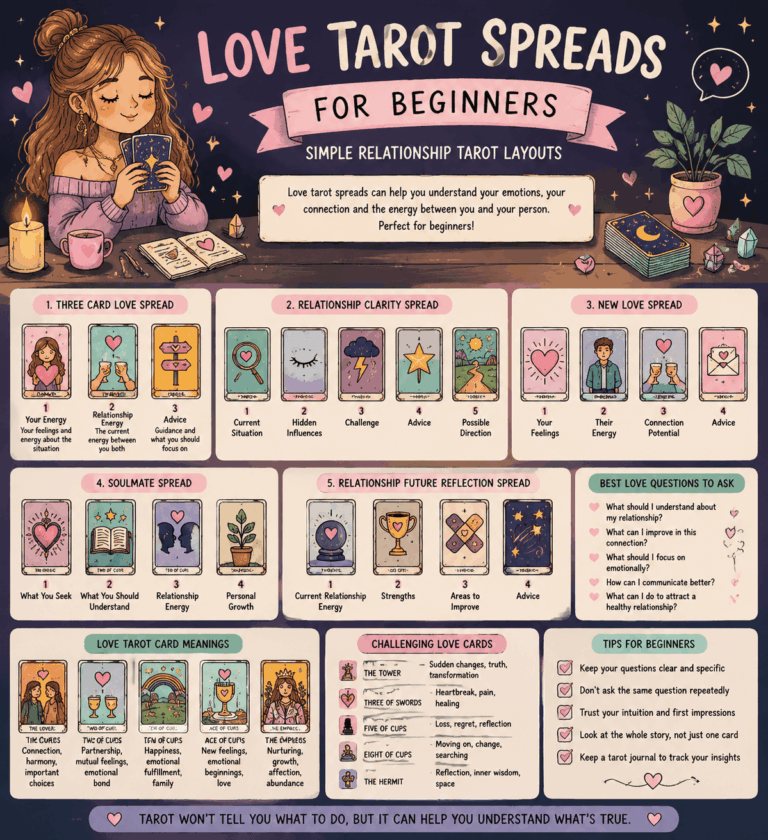
Step 7: Try a Three-Card Tarot Spread
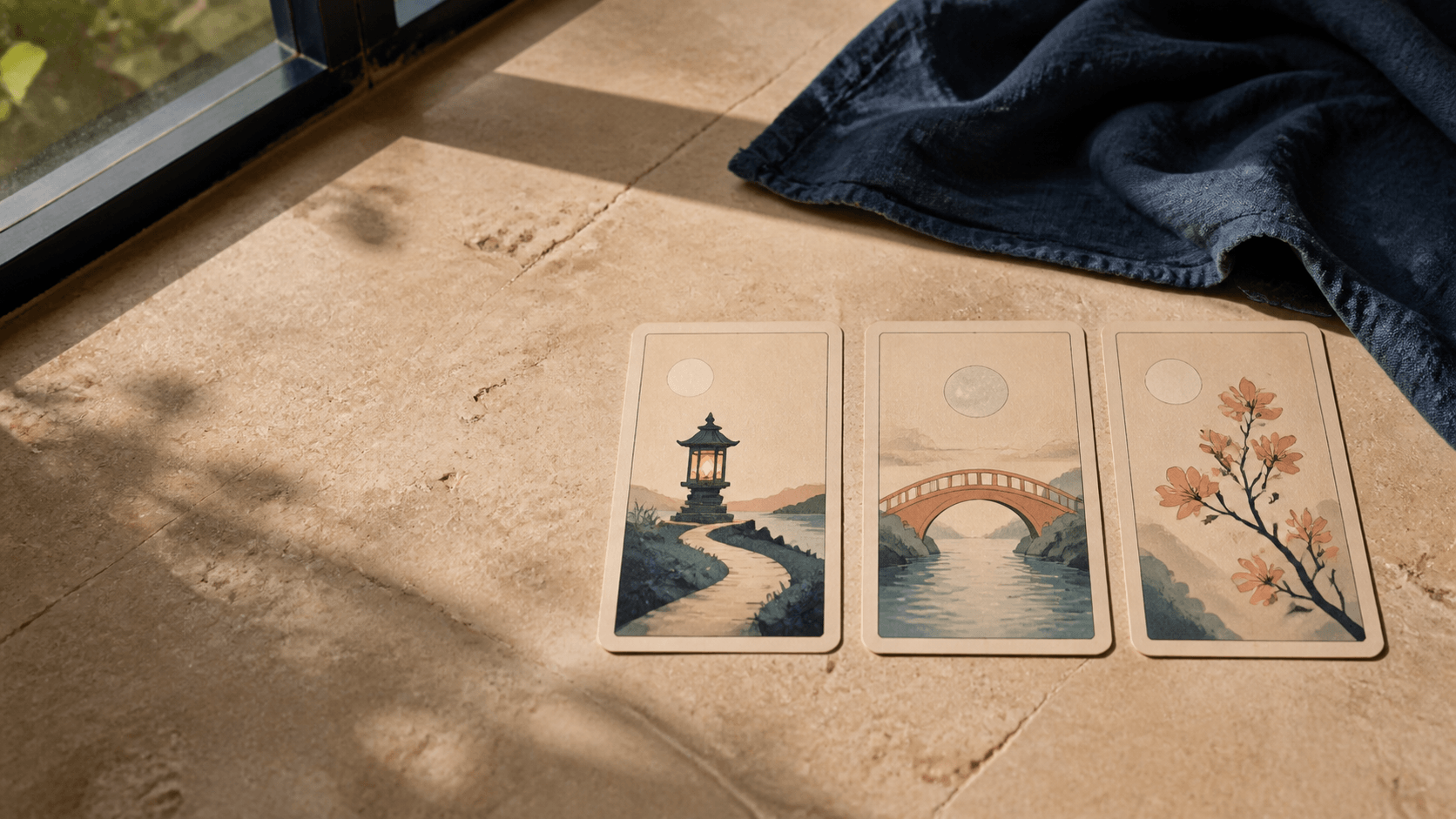
After practicing one-card readings, a three-card spread is a natural next step.
Here are a few beginner-friendly options.
Past, Present, Future
This spread can help you reflect on a situation over time.
- What has shaped this situation?
- What is most important now?
- What direction could I consider next?
Do not treat the third card as a guaranteed future. Think of it as a possible theme, perspective, or area of attention.
Situation, Challenge, Guidance
This spread is useful when you feel stuck.
- What is happening?
- What is making this difficult?
- What could help me respond?
Mind, Heart, Action
This spread is helpful for personal reflection.
- What am I thinking about this situation?
- What am I feeling?
- What practical action could help?
Step 8: Keep a Tarot Journal
A tarot journal can help you remember cards and notice how your interpretations develop.
After a reading, write down:
- The date
- Your question
- The cards you drew
- Your first impression
- The guidebook meaning
- Any action or reflection you want to carry forward
You may discover that certain cards appear often during particular seasons of life. A journal can make learning more personal and less dependent on memorization.
Should You Use Reversed Tarot Cards?
Reversed cards are cards that appear upside down in a reading.
Some readers use reversals. Others do not.
A reversed card may be interpreted as:
- An inward or private version of the card’s theme
- A delay or challenge
- An imbalance
- A need to reconsider something
- A different perspective
As a beginner, you do not need to use reversed cards right away. Learning the upright meanings first is more than enough.
If you later want to include reversals, add them gradually and keep your interpretations flexible.
Common Tarot Reading Mistakes to Avoid
Trying to Memorize Everything at Once
Tarot takes time. Focus on the overall structure, the suits, and your own observations before trying to learn every detail.
Treating Every Card as a Fixed Answer
A card can carry different meanings depending on the question, the spread, and the surrounding cards. Context matters.
Asking the Same Question Repeatedly
Drawing card after card about the same issue can create more confusion. Give yourself time to reflect before asking again.
Using Tarot Instead of Practical Support
Tarot can be useful for reflection, but it should not replace medical care, legal advice, financial guidance, or professional mental health support.
Reading When You Feel Overwhelmed
If you feel very anxious or emotionally distressed, pause the reading. Take care of yourself first and return to tarot when you feel more grounded.
Final Thoughts
Learning tarot is less about finding perfect predictions and more about building a thoughtful practice of reflection.
Start with one card, ask open questions, look closely at the imagery, and keep your interpretations practical. With regular practice, the symbols and patterns of the tarot deck will become more familiar.
The best tarot readings leave you with a clearer question, a new perspective, or one grounded next step.
Frequently Asked Questions
Can anyone learn to read tarot cards?
Yes. Tarot is a skill that can be learned through observation, reading, journaling, and regular practice.
How long does it take to learn tarot?
You can start with one-card readings immediately. Learning the full deck may take months or longer, depending on how often you practice.
Do I need to be psychic to read tarot?
No. Many people use tarot as a symbolic tool for reflection and do not consider themselves psychic.
What is the easiest tarot spread for beginners?
A one-card reading is the easiest place to start. After that, a three-card spread such as Situation, Challenge, Guidance is a helpful next step.
Can I read tarot for myself?
Yes. Reading for yourself can be a useful journaling and reflection practice. Keep your questions open and remember that your own perspective may influence the interpretation.