One Card Tarot Reading: How to Read a Single Tarot Card
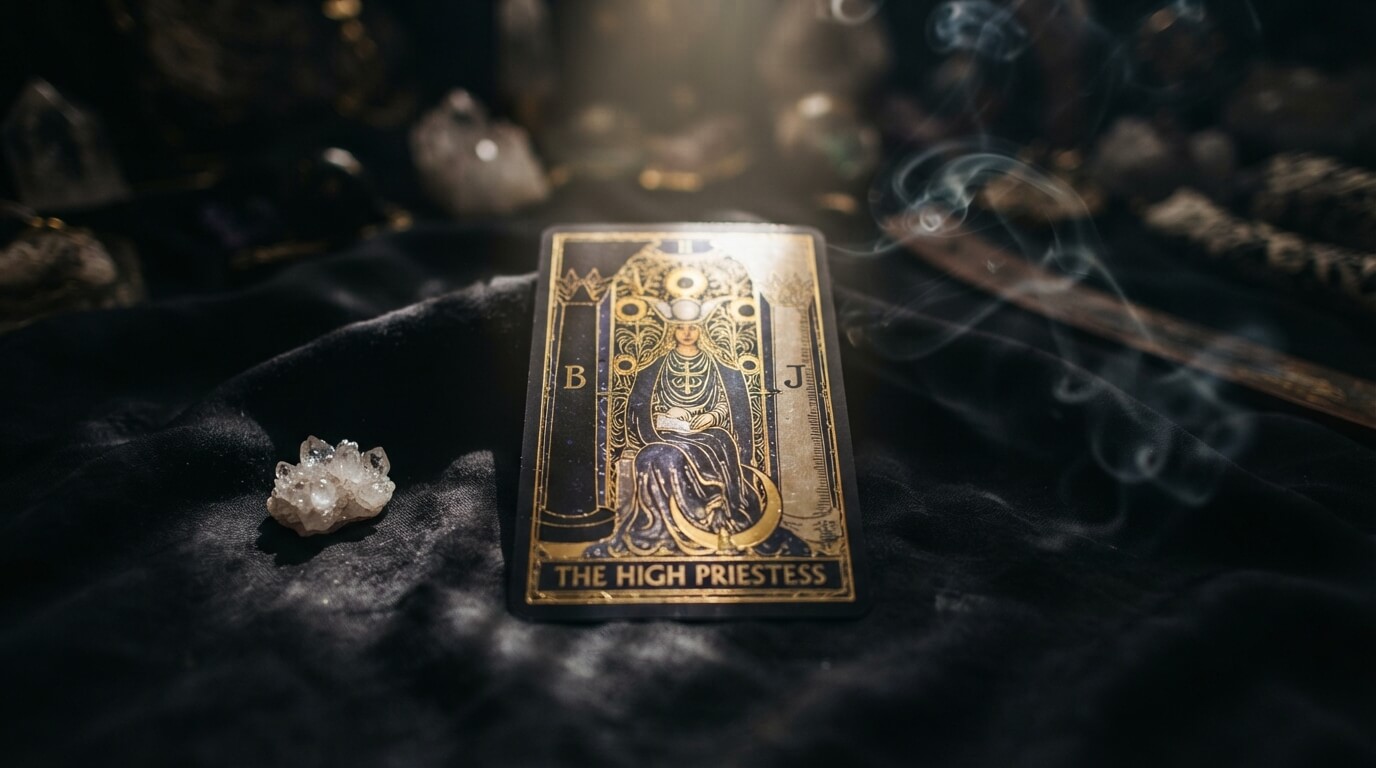
A one card tarot reading is one of the simplest ways to work with tarot cards. Instead of using a large tarot spread, you draw a single card to explore a specific question, situation, feeling, or area of your life.
A single tarot card can be used for daily guidance, love questions, career reflection, personal growth, and yes-or-no readings. It is also one of the best ways for beginners to practice understanding tarot card meanings without becoming overwhelmed by a complicated spread.
In this guide, you will learn how to do a one card tarot reading, how to read a single tarot card, what questions to ask, whether one-card readings can be used for love and yes-or-no questions, and whether tarot card readings are considered bad luck.
What Is a One Card Tarot Reading?
A one card tarot reading is a reading in which you draw one tarot card and interpret it in relation to a specific question or situation.
Unlike a larger tarot spread, there are no multiple positions to compare. The single card becomes the central focus of the reading.
For example, you might ask:
“What should I focus on today?”
You then shuffle your deck, draw one card, and consider how its symbolism and traditional meaning relate to your question.
A one card reading can be used for:
- Daily tarot guidance
- Love and relationship questions
- Career reflection
- Personal growth
- Decision-making
- Spiritual reflection
- Journaling
- Learning tarot card meanings
- Quick tarot readings
One card does not necessarily provide a complete explanation of a complicated situation. Instead, it can highlight a particular theme, perspective, or question worth considering.
How to Do a One Card Tarot Reading
Learning how to do a one card tarot reading is relatively simple. You do not need an elaborate ritual or a complicated tarot spread.
1. Choose a Question
Start with one clear question.
For example:
“What should I know about my career right now?”
Try not to combine several unrelated questions into one reading.
2. Shuffle Your Tarot Cards
Hold your deck and focus on the question while shuffling.
There is no universally required way to shuffle tarot cards. You can use whichever method feels comfortable.
3. Draw One Card
When you feel ready, draw a single card and place it face up.
Before looking at a guidebook, spend a few moments examining the image.
4. Observe the Card
Notice:
- The characters
- Symbols
- Colors
- Objects
- Facial expressions
- Direction of movement
- Overall mood
Ask yourself what immediately stands out.
5. Consider the Traditional Meaning
After forming your initial impression, look at the traditional meaning of the card.
Think about how that meaning relates to the question you asked.
6. Put the Meaning Into Context
The same card can have different interpretations depending on the question.
For example, The Chariot in a career reading could suggest determination, direction, discipline, or forward movement.
In a relationship reading, the same card might encourage you to consider control, shared direction, or the need to communicate about where the relationship is going.
The question matters just as much as the card.
Can You Do a Tarot Reading With One Card?
Yes. You can absolutely do a tarot reading with one card.
A one-card tarot reading can be surprisingly useful because it forces you to focus on one central message instead of trying to interpret several cards at once.
For beginners, this can make learning tarot easier.
A single card can represent:
- A central theme
- Advice
- An area of attention
- A challenge
- An opportunity
- A lesson
- A possible perspective
However, one card may not provide enough context for a complex question.
If you are dealing with a situation involving several different factors, a three-card or five-card tarot spread may provide more structure.
For simple questions and daily reflection, however, one card can be enough.
How to Choose a Question for a One Card Reading
The quality of a tarot reading often depends on the question.
A question such as:
“What will happen?”
is extremely broad.
Instead, try:
“What should I focus on as I move forward?”
Open-ended questions can provide more room for interpretation.
Good Question Starters
Try beginning your question with:
- What should I know about…?
- What should I focus on…?
- What can I learn from…?
- What am I not seeing clearly?
- What should I consider before…?
- What could help me…?
- What should I be aware of?
- How can I approach…?
- What lesson can I take from…?
For example, instead of asking:
“Will I get this job?”
you could ask:
“What should I understand about this career opportunity?”
This type of question encourages reflection rather than requiring the card to provide a simple prediction.
One Card Tarot Reading for Beginners
A one card tarot reading is particularly suitable for beginners because there is only one card to interpret.
You do not need to memorize all 78 tarot cards before starting.
A simple beginner routine is to draw one card every morning.
Ask:
“What should I focus on today?”
Then write down your card and your first interpretation.
At the end of the day, look back at your notes and consider whether the card’s theme appeared in your experiences.
This practice can help you become familiar with the Major Arcana, Minor Arcana, suits, numbers, and recurring symbols.
Beginner One-Card Exercise
Try this:
Question: What should I focus on today?
Card: Draw one card.
First impression: What do you notice?
Traditional meaning: What does the card commonly represent?
Connection: How might that meaning relate to your day?
Reflection: What did you learn?
Keeping this process simple can help you develop confidence without overcomplicating your readings.
How to Read a Single Tarot Card
Learning how to read one tarot card involves more than memorizing a definition.
A good interpretation combines several elements.
1. Look at the Imagery
Study the card carefully.
Ask:
- What is happening in the image?
- What catches my attention?
- Does the scene look calm or tense?
- Is the figure moving or standing still?
- What symbols appear important?
Your first reaction can provide a useful starting point.
2. Consider the Traditional Meaning
Tarot cards have commonly associated meanings.
For example:
The Fool is often associated with new beginnings, exploration, spontaneity, and taking a step into the unknown.
The Hermit is commonly associated with introspection, solitude, wisdom, and seeking understanding.
The Sun is often associated with clarity, confidence, optimism, and vitality.
These meanings are starting points rather than strict rules.
3. Consider the Question
Always interpret the card in relation to your question.
A card about movement may mean something different in a career reading than in a relationship reading.
4. Consider Your Personal Response
Ask yourself:
“Why did this particular part of the card stand out to me?”
Your reaction can turn a basic card interpretation into a more personal reflection.
Are One-Card Tarot Readings Bad Luck?
No, there is no established evidence that doing a one card tarot reading causes bad luck.
Some spiritual traditions and personal beliefs associate tarot with particular rituals, warnings, or ideas about fortune. Other readers view tarot simply as a symbolic or reflective practice.
Whether you consider tarot spiritual, intuitive, recreational, or reflective is a personal choice.
A one-card reading itself is not inherently dangerous or unlucky.
It is also worth remembering that tarot has not been scientifically established as a method for predicting future events. If you use tarot, it can be helpful to approach it as a tool for reflection rather than as a guaranteed source of future information.
Why Do Some People Think Tarot Is Bad Luck?
Several ideas about tarot being unlucky come from cultural beliefs, religious perspectives, entertainment portrayals, and misconceptions about fortune-telling.
Movies and popular culture sometimes portray tarot as mysterious or dangerous, which can reinforce these ideas.
In practice, people use tarot in many different ways. Some use it for spiritual rituals, while others use it for journaling, creativity, meditation, or personal reflection.
One Card Tarot Reading for Love
A one card tarot reading for love can be used to reflect on your romantic life, emotions, relationship patterns, or personal priorities.
Instead of asking only:
“Does this person love me?”
you can ask:
- What should I understand about my love life?
- What should I focus on in my relationship?
- What can I learn from this romantic situation?
- What relationship pattern should I be aware of?
- What should I consider before pursuing this connection?
- How can I approach my love life differently?
- What should I prioritize in a relationship?
A single card should not be treated as factual proof of another person’s private thoughts or feelings.
It can instead provide a prompt for examining your own feelings and the dynamics you are experiencing.
One Card Tarot Reading for Career
A single tarot card can also be used to reflect on your professional life.
Try asking:
- What should I focus on in my career?
- What professional strength should I develop?
- What challenge should I pay attention to?
- What should I know about my current job?
- What should I consider before changing jobs?
- What skill could benefit me right now?
- What opportunity should I pay attention to?
For important career decisions, tarot should not replace practical research, career counseling, or professional advice.
Instead, use the reading as a way to organize your thoughts and identify areas you may want to explore further.
Free One Card Tarot Reading
People often search for a free one card tarot reading because they want a quick way to explore a question without paying for a professional reading.
A free one card reading can be performed with a physical tarot deck, a digital tarot tool, or an online tarot service.
The basic process remains the same:
- Choose a question.
- Shuffle or digitally select a card.
- Draw one card.
- Read the card’s meaning.
- Relate the card to your question.
- Reflect on the message.
Free online readings can be entertaining and useful for learning, but remember that automated tarot tools may provide generalized interpretations.
If you are using an online service, check how the site handles personal information and whether it clearly explains its terms.
One Card Tarot Reading for Yes or No Questions
A common question is whether you can use one card tarot reading for yes or no questions.
Some tarot readers do use a single card to give a yes-or-no interpretation.
There is no single universally accepted system for determining which cards mean “yes” and which mean “no.”
Some readers categorize cards according to their symbolism, while others consider the overall energy of the card.
For example, cards associated with themes such as success, clarity, progress, or celebration may be interpreted more positively.
Cards associated with conflict, uncertainty, restriction, or endings may be interpreted differently.
However, tarot is not scientifically proven to predict whether an event will happen.
For more useful insight, you can turn a yes-or-no question into an open-ended question.
Instead of:
“Should I accept this job?”
try:
“What should I consider before accepting this job?”
This allows the reading to explore the situation rather than forcing one card into a binary answer.
How to Read Tarot Cards Without Memorizing Every Meaning
You do not need to memorize every tarot card meaning before you can start reading.
Try using the card itself as a visual prompt.
Step 1: Look at the Image
Study the card for several moments.
Step 2: Describe What You See
Write down the people, objects, symbols, environment, and movement.
Step 3: Identify the Mood
Does the card feel:
- Calm?
- Energetic?
- Positive?
- Difficult?
- Mysterious?
- Hopeful?
- Restrictive?
Step 4: Connect It to Your Question
Ask:
“If this card were giving me advice about my question, what could it be suggesting?”
Step 5: Check the Traditional Meaning
Finally, compare your interpretation with a tarot guide or reference.
Over time, this method can help you learn tarot without relying entirely on memorization.
Common One Card Tarot Reading Mistakes
Drawing Too Many Clarifying Cards
If you do not immediately understand a card, you may be tempted to draw another card.
Then another.
Soon, a one-card reading can turn into a large and confusing spread.
Before drawing another card, spend more time with the original one.
Asking the Same Question Repeatedly
Repeatedly asking the same question can make a reading harder to interpret.
Give yourself time to think about the first reading before returning to the cards.
Ignoring the Question
A tarot card should be interpreted within the context of the question.
Do not rely only on a memorized definition.
Looking Only for Positive Answers
Not every tarot card has to be interpreted as positive.
Difficult cards can also encourage reflection about challenges, boundaries, decisions, or lessons.
Treating the Reading as Certain
Tarot can be used for spiritual practice and personal reflection, but it is not scientifically established as a reliable method of predicting the future.
Use your own judgment when making important decisions.
How to Keep a One Card Tarot Journal
A tarot journal can make your one-card readings much more useful over time.
For each reading, record:
Date:
Question:
Card:
Upright or reversed:
First impression:
Traditional meaning:
My interpretation:
What happened afterward:
After several weeks, review your entries.
You may notice that certain cards appear frequently or that you interpret certain symbols differently depending on the situation.
A journal also gives you a record of how your tarot reading skills develop.
Frequently Asked Questions
How do you do a one card tarot reading?
Choose one clear question, shuffle your tarot deck, draw one card, study its imagery, consider its traditional meaning, and interpret it in relation to your question.
Can you do a tarot reading with one card?
Yes. A single card can represent the main theme, advice, challenge, opportunity, or perspective surrounding a question.
What is a one card tarot reading good for?
One-card readings are useful for daily guidance, personal reflection, simple questions, learning tarot, and exploring a particular theme.
Is one card enough for a tarot reading?
It can be. One card works particularly well for focused questions. More complicated situations may benefit from a three-card or larger tarot spread.
Is one card tarot reading good for beginners?
Yes. One-card readings are one of the easiest ways for beginners to practice interpreting tarot without becoming overwhelmed by multiple cards.
Are tarot card readings bad luck?
There is no established evidence that tarot card readings cause bad luck. Beliefs about tarot vary between cultures, religions, and individuals.
Can I do a free one card tarot reading?
Yes. You can perform a one-card reading yourself with a physical deck or use an online tarot tool. Free online readings often provide generalized interpretations.
Can one tarot card answer yes or no?
Some tarot readers use one card for yes-or-no questions, but there is no scientifically validated system proving that tarot cards can reliably predict yes-or-no outcomes.
What is the difference between one card tarot and a tarot spread?
A one-card reading uses one card, while a tarot spread uses multiple cards arranged in specific positions. A larger spread can provide more context, while a one-card reading is simpler and more focused.
How should I interpret one tarot card?
Consider the imagery, traditional card meaning, your question, your first impression, and the context of the situation. Avoid relying on a single keyword or definition.
Final Thoughts
A one card tarot reading is a simple and accessible way to explore tarot. You only need one card, one question, and a willingness to reflect on what the card might represent.
Whether you are interested in a one tarot card reading, a free one card tarot reading, daily guidance, love, career, or a simple yes-or-no question, the basic process remains the same: ask a clear question, draw one card, study it carefully, and interpret it within the context of your situation.
For beginners, one-card readings are also an excellent way to learn tarot. With regular practice and a tarot journal, you can gradually become more comfortable with the cards and develop your own interpretation style.
Most importantly, treat tarot as a reflective or spiritual practice rather than a guaranteed method of predicting the future. Your own judgment and decisions should remain at the center of important choices.