Tarot Card Meanings: A Complete Beginner’s Guide to the 78 Cards
Introduction
Tarot cards have been used for centuries as a tool for storytelling, symbolism, reflection, and personal insight. Today, many people turn to tarot when they want to think through a situation, explore a question, or create a quiet moment of self-reflection.
A standard tarot deck contains 78 cards. Each card has traditional imagery and themes, but its meaning can shift depending on the question, the surrounding cards, and the reader’s own interpretation.
Learning tarot does not require memorizing every possible meaning immediately. The most helpful starting point is understanding how the deck is organized and what the main groups of cards represent.
This guide explains the Major Arcana, Minor Arcana, suits, court cards, and common tarot card meanings in a simple, beginner-friendly way.
What Is Tarot?
Tarot is a deck of illustrated cards often used for reflection, symbolic interpretation, and personal exploration.
A tarot reading may focus on topics such as:
- Personal growth
- Relationships
- Career direction
- Creative projects
- Habits and routines
- Emotional reflection
- A decision you are considering
Tarot should not be treated as a guaranteed method for predicting the future. It is usually most useful when approached as a way to explore perspectives, ask better questions, and reflect on what you already know.
For major medical, legal, financial, safety, or relationship decisions, rely on qualified professionals and practical information alongside any personal spiritual practice.
How Is a Tarot Deck Organized?
A traditional tarot deck has 78 cards divided into two main groups:
- The Major Arcana: 22 cards
- The Minor Arcana: 56 cards
The Major Arcana explores larger life themes, turning points, and personal lessons. The Minor Arcana focuses more on everyday experiences, choices, emotions, work, and relationships.
The Minor Arcana is divided into four suits:
- Wands
- Cups
- Swords
- Pentacles
Each suit includes ten numbered cards and four court cards.
Major Arcana Tarot Card Meanings
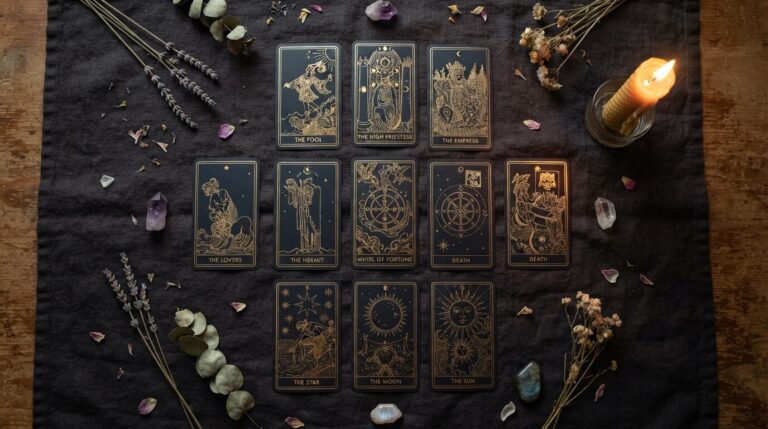
The 22 Major Arcana cards are often seen as the central symbolic journey of the tarot deck. They can represent major themes, inner shifts, or important stages of growth.
The Fool
The Fool is often linked with beginnings, curiosity, openness, and taking a first step.
It may appear when you are entering a new chapter or considering something unfamiliar. Its message is not to act without thought, but to remain open to possibility.
The Magician
The Magician is associated with focus, skill, intention, and using available resources.
This card may encourage you to notice what you already know, what tools you have, and how you can take practical action.
The High Priestess
The High Priestess is often connected with intuition, stillness, and information that has not fully surfaced yet.
It may suggest taking time to listen to yourself before rushing toward an answer.
The Empress
The Empress is commonly associated with creativity, care, abundance, and nurturing growth.
It can relate to creative ideas, relationships, home life, or giving a project more time and attention.
The Emperor
The Emperor represents structure, responsibility, boundaries, and stability.
This card may invite you to create a plan, organize your priorities, or take a more grounded approach.
The Hierophant
The Hierophant is linked with tradition, learning, shared values, and guidance.
It may appear when you are exploring established systems, seeking a mentor, or reflecting on your beliefs.
The Lovers
The Lovers is often associated with relationships, values, choices, and alignment.
It can encourage you to consider whether your choices reflect what truly matters to you.
The Chariot
The Chariot represents direction, determination, and self-discipline.
This card may suggest focusing your energy and moving forward despite competing pressures.
Strength
Strength is connected with patience, courage, emotional steadiness, and self-compassion.
It often suggests that calm persistence can be more useful than force.
The Hermit
The Hermit is associated with reflection, solitude, learning, and inner guidance.
It may be a reminder to step back from noise and give yourself space to think.
Wheel of Fortune
The Wheel of Fortune is often linked with cycles, change, timing, and unexpected movement.
It can encourage flexibility when circumstances are shifting.
Justice
Justice represents fairness, responsibility, clarity, and accountability.
This card may invite you to look honestly at a situation and consider the consequences of a decision.
The Hanged Man
The Hanged Man is associated with pause, surrender, and seeing a situation from a new angle.
It may suggest that progress sometimes comes from waiting or changing perspective.
Death
Despite its dramatic name, the Death card is usually linked with endings, release, transition, and renewal.
It may appear when a habit, relationship pattern, role, or chapter is changing.
Temperance
Temperance represents balance, moderation, patience, and integration.
This card often encourages a steady approach rather than extremes.
The Devil
The Devil may relate to unhealthy patterns, fear, attachment, or feeling stuck.
Rather than predicting something negative, it can invite honest reflection about what has too much power over your choices.
The Tower
The Tower is often associated with sudden insight, disruption, or a belief that no longer holds up.
It may be uncomfortable, but it can also make room for a more honest foundation.
The Star
The Star represents hope, healing, inspiration, and renewed trust in the future.
It can be a gentle reminder to reconnect with what gives you perspective and encouragement.
The Moon
The Moon is connected with uncertainty, imagination, emotions, and what may be unclear.
It may suggest slowing down and avoiding quick assumptions.
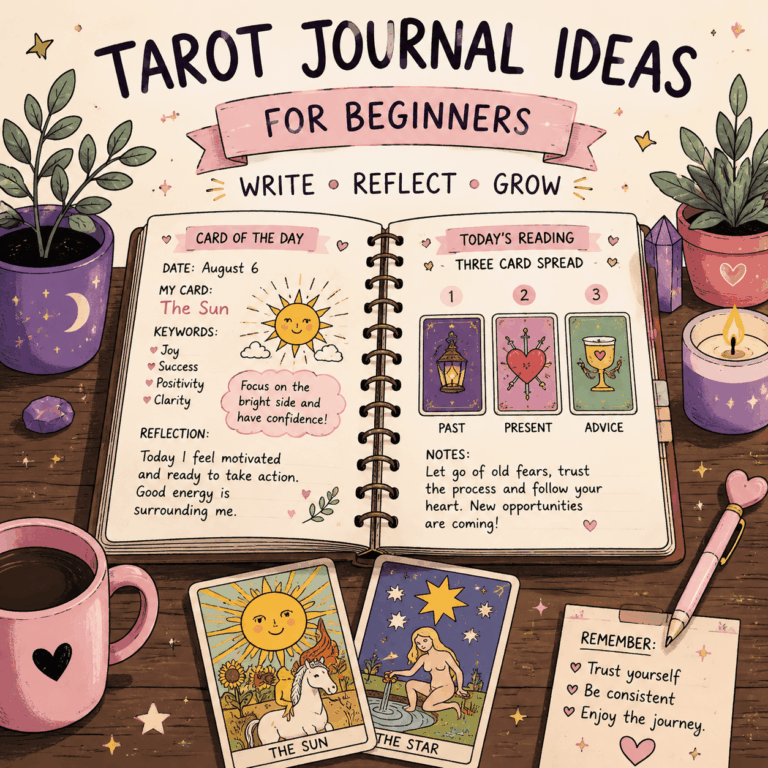
The Sun
The Sun is often linked with joy, clarity, confidence, and openness.
It can represent a time of increased energy, visibility, or positive momentum.
Judgement
Judgement is associated with reflection, realization, accountability, and renewal.
It may appear when you are reviewing a past choice or preparing to move forward with greater clarity.
The World
The World represents completion, integration, achievement, and the end of one cycle.
It can suggest recognizing how far you have come before beginning something new.
Minor Arcana Tarot Card Meanings
The Minor Arcana describes the everyday parts of life: thoughts, feelings, work, communication, routines, challenges, and opportunities.
Each suit has its own overall theme.
Wands Meaning: Passion, Energy, and Action
Wands are commonly associated with inspiration, drive, creativity, ambition, and forward movement.
A Wands card may appear when you are thinking about:
- Starting a project
- Pursuing a goal
- Taking initiative
- Building confidence
- Managing your energy
The Ace of Wands often represents a spark of inspiration. The Ten of Wands may suggest carrying too much responsibility. The cards between them explore the movement from an early idea to effort, obstacles, progress, and completion.
Cups Meaning: Emotions and Relationships
Cups are traditionally associated with feelings, connection, imagination, and relationships.
A Cups card may relate to:
- Emotional needs
- Love and friendship
- Intuition
- Memories
- Personal fulfillment
The Ace of Cups may suggest emotional openness or a new feeling. The Five of Cups often relates to disappointment or focusing on what is missing. The Ten of Cups is commonly connected with harmony, gratitude, and emotional connection.
Swords Meaning: Thoughts and Communication
Swords are commonly linked with thinking, communication, decisions, conflict, truth, and mental clarity.
A Swords card may appear when you are dealing with:
- A difficult conversation
- Competing ideas
- A decision
- Worry or overthinking
- The need for a clearer boundary
The Ace of Swords can represent clarity or a new idea. The Two of Swords may reflect indecision. The Ten of Swords is often associated with an ending or the recognition that a difficult pattern needs to change.
Pentacles Meaning: Work, Resources, and Daily Life
Pentacles are usually connected with practical matters such as work, money, skills, routines, home, and long-term stability.
A Pentacles card may relate to:
- Career goals
- Learning a skill
- Budgeting
- Daily habits
- Material comfort
- Building something gradually
The Ace of Pentacles may suggest a practical opportunity or new foundation. The Eight of Pentacles is often linked with practice and craftsmanship. The Ten of Pentacles can represent long-term security, shared resources, or legacy.
What Do Tarot Court Cards Mean?
Each tarot suit has four court cards:
- Page
- Knight
- Queen
- King
Court cards can represent a person, a personality style, a role you are taking on, or an approach to a situation.
Pages
Pages are often associated with curiosity, learning, messages, and an early stage of development.
Knights
Knights commonly represent movement, pursuit, intensity, and action. Their energy may be focused, fast, cautious, or emotionally driven depending on the suit.
Queens
Queens are often connected with maturity, confidence, inner knowledge, and a nurturing or self-directed form of leadership.
Kings
Kings are usually associated with authority, responsibility, experience, and outward leadership.
A court card does not always mean a specific person will appear in your life. It can also describe a quality to develop or an attitude to consider.
A Simple Way to Read Tarot Cards
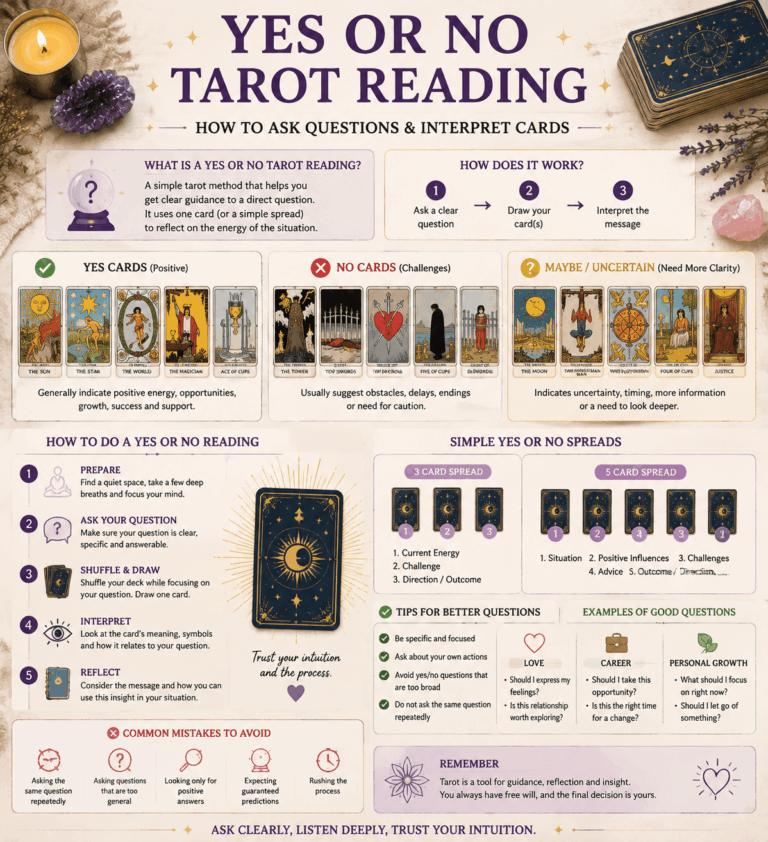
If you are new to tarot, begin with one card rather than a complicated spread.
Try this simple process:
1. Ask an Open Question
Questions work best when they invite reflection.
Instead of asking:
- “Will this happen?”
Try asking:
- “What should I understand about this situation?”
- “What perspective am I missing?”
- “What can help me approach this more clearly?”
- “What energy should I bring to this decision?”
2. Notice the Image First
Before searching for a card meaning, look at the card’s imagery.
Ask yourself:
- What stands out first?
- Does the scene feel active, calm, uncertain, or hopeful?
- Which color, symbol, or expression catches your attention?
- What does the image remind you of in your own life?
This helps build a more personal connection with the card.
3. Add the Traditional Meaning
Next, read the traditional themes connected with the card. Compare them with your first impression and your original question.
4. Keep the Interpretation Practical
End with one grounded question:
- What is one useful action I can take?
- What needs more attention?
- What would a balanced response look like?
Tarot can be more useful when it encourages reflection and practical next steps rather than certainty.
Do Reversed Tarot Cards Have Different Meanings?
Some tarot readers use reversed cards, meaning cards that appear upside down in a spread. Others read every card upright.
There is no single correct approach.
A reversed card may be interpreted as:
- An internal version of the card’s theme
- A delay or block
- A need to reconsider something
- An imbalance
- A different angle on the upright meaning
Beginners do not need to use reversals immediately. It is perfectly fine to learn the upright meanings first.
Final Thoughts
Tarot card meanings are not fixed instructions or guaranteed predictions. They are symbolic themes that can help you explore a question, notice patterns, and reflect on your next step.
Start with the Major Arcana, learn the four Minor Arcana suits, and take your time. The more you observe the card imagery and connect it with real life, the more naturally the deck may begin to make sense.
Frequently Asked Questions
How many tarot cards are in a deck?
A standard tarot deck has 78 cards: 22 Major Arcana cards and 56 Minor Arcana cards.
What is the difference between the Major and Minor Arcana?
The Major Arcana focuses on larger symbolic themes and turning points. The Minor Arcana focuses on everyday experiences, emotions, work, thoughts, and relationships.
Do I need to memorize every tarot card meaning?
No. Start with the main structure of the deck and the broad meanings of each suit. Learning tarot is gradual.
Can tarot predict the future?
Tarot should not be treated as a guaranteed prediction tool. Many people use it for reflection, symbolism, and exploring different perspectives.
What is the best tarot deck for beginners?
A deck with clear imagery and a guidebook can be helpful. The Rider–Waite–Smith tradition is often used in beginner resources because many modern tarot interpretations are based on its symbolism.