
Tarot Spreads: 25+ Tarot Card Spreads for Love, Guidance & Beginners

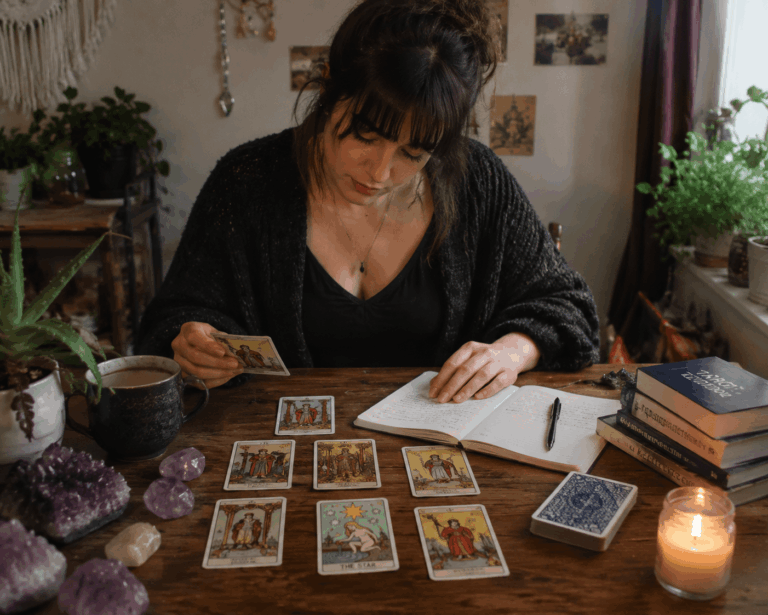
Tarot spreads are one of the most useful ways to turn a deck of tarot cards into a structured reading. Instead of drawing cards randomly, a tarot spread assigns each card a specific position and meaning. This helps you explore questions about love, relationships, career, personal growth, decisions, and everyday guidance.
Whether you are completely new to tarot or already have experience reading the cards, choosing the right spread can make a reading easier to understand.
In this guide, you will learn what tarot spreads are, how to use tarot card spreads, different tarot spreads for beginners, popular tarot spreads for love and relationships, and several layouts you can try for guidance and self-reflection.
What Are Tarot Spreads?
A tarot spread is a specific arrangement of tarot cards in which each position represents a particular aspect of a question or situation.
For example, a simple three-card tarot spread might represent:
- Past
- Present
- Future
Another spread might use the positions:
- Situation
- Challenge
- Advice
The meaning of the cards is interpreted together with the position they occupy. This gives the reading additional context compared with drawing a single card.
There are many different tarot spreads, ranging from simple one-card readings to large layouts containing ten or more cards.
How Do Tarot Spreads Work?
Before beginning a reading, decide what you want to explore. Your question can be specific, such as:
“What should I focus on in my career right now?”
Or it can be more open-ended:
“What guidance can I use in my current situation?”
After choosing a question, select a tarot spread that matches your purpose. Shuffle your cards while focusing on the question, then draw the number of cards required by the spread.
Place each card in its assigned position and consider both the traditional meaning of the card and the meaning of its position.
Remember that tarot is generally used as a tool for reflection, symbolism, and personal insight rather than a scientifically proven method of predicting the future.
How to Do a Tarot Spread
You do not need an elaborate setup to perform a tarot reading. A simple process can work well:
1. Choose Your Question
Start with one clear question or area of focus.
Instead of asking:
“Will everything be okay?”
You might ask:
“What can I do to improve this situation?”
Open-ended questions often provide more room for reflection.
2. Choose a Spread
Select a layout based on your experience and the type of question you have.
Beginners may want to start with a one-card or three-card spread before moving to larger layouts.
3. Shuffle the Cards
Shuffle the deck in whichever way feels comfortable. There is no single universally required method for shuffling tarot cards.
Focus on your question while you shuffle.
4. Draw Your Cards
Draw the number of cards required by your chosen spread and place them in their corresponding positions.
5. Interpret the Reading
Look at each card individually, then consider how the cards interact with one another.
The goal is not simply to memorize every card meaning. Consider the imagery, symbolism, position, and relationship between the cards.
25+ Different Tarot Spreads to Try
There are countless tarot card spreads available, but you do not need to learn them all at once.
Here are some popular layouts to explore.
1. One-Card Tarot Spread
The one-card tarot spread is one of the easiest readings for beginners.
Ask a question or choose a theme for the day, then draw one card.
You can use the card as:
- Daily guidance
- A reflection prompt
- A theme for the day
- Advice about a situation
- A question to consider
A one-card reading is particularly useful when you want a quick and uncomplicated reading.
2. Three-Card Tarot Spread
The three-card spread is one of the most flexible tarot spreads.
A classic version uses:
Past — Present — Future
However, you can create many variations.
For example:
Situation — Challenge — Advice
or:
What I Know — What I Don’t Know — What I Should Consider
Three-card tarot spreads are excellent for beginners because they provide more context than a one-card reading without becoming overwhelming.
3. Tarot Spread for Beginners
If you are learning tarot, start with simple layouts.
A beginner-friendly spread might use:
- Where am I now?
- What is influencing my situation?
- What should I focus on?
This type of spread allows you to practice interpreting cards while keeping the reading organized.
You can also begin with a one-card daily reading and gradually move to three-card spreads.
4. Five-Card Tarot Spread
A five-card spread provides more detail while remaining relatively easy to interpret.
One possible layout is:
- Current situation
- Past influence
- Present challenge
- Advice
- Possible direction
Five-card spreads can be adapted to almost any subject, including relationships, career, personal growth, and decision-making.
5. Ten-Card Tarot Spread
A ten-card tarot spread can provide a much more detailed overview.
One of the best-known ten-card layouts is the Celtic Cross. Depending on the version being used, positions can explore areas such as:
- Current situation
- Challenge
- Past
- Future
- Conscious influences
- Subconscious influences
- Advice
- External influences
- Hopes and fears
- Potential outcome
Because ten cards create considerably more information, this type of reading may be better suited to readers who already have some tarot experience.
6. Love Tarot Spread
Tarot spreads for love can focus on relationships, emotions, communication, and personal expectations.
A simple love tarot spread might use:
- My feelings
- Their feelings
- The current relationship energy
- The main challenge
- Advice
Rather than treating the reading as a guaranteed prediction, use it as an opportunity to examine emotions and relationship dynamics.
7. Relationship Tarot Spread
A relationship spread can explore the dynamics between two people.
Try:
- My perspective
- Their perspective
- What connects us
- What challenges us
- What needs attention
- Advice
This layout can be particularly useful when you want to think about communication and expectations.
8. Career Tarot Spread
Career tarot spreads can be used for reflection when considering professional goals or changes.
A simple career spread could include:
- Where I am professionally
- My greatest strength
- My current obstacle
- What opportunity should I notice?
- What should I focus on next?
Tarot should not replace practical career research or professional advice, but it can provide another way to reflect on your priorities.
9. Decision-Making Tarot Spread
When facing two choices, try a spread that examines both options.
For example:
- Option A — potential benefit
- Option A — potential challenge
- Option B — potential benefit
- Option B — potential challenge
- What should I consider before deciding?
This structure encourages you to look at multiple sides of a decision rather than relying on a single card.
10. Yes or No Tarot Spread
Some readers use tarot for yes-or-no questions.
One approach is to draw one card and interpret it according to the symbolism of the card.
Another approach is to draw three cards and consider whether the overall energy appears more supportive or restrictive.
However, tarot cards do not provide scientifically verified yes-or-no predictions. The reading can instead be treated as a reflective tool for exploring why you are asking the question and what factors may influence your decision.
11. Self-Love Tarot Spread
Try these positions:
- How do I currently see myself?
- What should I appreciate about myself?
- What belief is holding me back?
- What should I release?
- How can I practice greater self-compassion?
This is a useful spread for journaling and personal reflection.
12. Future Guidance Tarot Spread
A future-oriented spread can explore possibilities rather than claiming certainty.
Try:
- Where I am heading
- What may influence the situation
- What I can control
- What I should be aware of
- Advice for moving forward
13. Daily Tarot Spread
For a quick morning reading, draw three cards:
- Today’s energy
- What may require my attention
- Advice for today
You can record your cards in a journal and review your interpretations later.
14. Weekly Tarot Spread
A weekly spread can provide a broader theme:
- Main theme of the week
- Opportunity
- Challenge
- What to focus on
- Advice
15. New Moon Tarot Spread
A new moon spread can be used for setting intentions and reflecting on goals.
Consider:
- What am I beginning?
- What should I leave behind?
- What deserves my attention?
- What intention should I set?
- What action can support this intention?
16. Full Moon Tarot Spread
A full moon spread can focus on reflection and release:
- What has become clear?
- What have I learned?
- What no longer serves me?
- What should I release?
- What should I carry forward?
17. Shadow Work Tarot Spread
For deeper self-reflection, try:
- What am I avoiding?
- Why am I avoiding it?
- What belief influences this behavior?
- What can I learn from it?
- What would help me move forward?
Shadow work readings can bring up emotionally difficult topics, so approach them thoughtfully.
18. Three-Question Tarot Spread
You can create a simple custom spread around three questions:
- What do I need to know?
- What do I need to understand?
- What can I do?
This is one of the easiest ways to create your own tarot card spread.
19. Problem-Solving Tarot Spread
For a difficult situation:
- What is the real problem?
- What is influencing it?
- What am I overlooking?
- What action could help?
- What should I learn?
20. Spiritual Guidance Tarot Spread
For spiritual reflection:
- Where am I spiritually?
- What lesson am I currently exploring?
- What should I become more aware of?
- What is blocking my growth?
- What can I focus on?
21. Friendship Tarot Spread
A friendship reading can explore the relationship without assuming that the cards provide objective information about another person’s private thoughts.
Try:
- What defines this friendship?
- What do I value about it?
- What challenge exists?
- What needs communication?
- How can I be a better friend?
22. Communication Tarot Spread
For situations involving misunderstandings:
- What am I trying to communicate?
- What might I be misunderstanding?
- What needs to be said?
- What should I listen for?
- What approach could improve communication?
23. Healing and Reflection Spread
For personal reflection:
- What am I carrying?
- What needs attention?
- What can I release?
- What support do I need?
- What should I focus on next?
24. Goal-Setting Tarot Spread
Use this spread when working toward a personal goal:
- What is my goal?
- What is helping me?
- What is getting in my way?
- What action should I take?
- What should I remember?
25. Past-Present-Future Spread
This classic three-card layout remains popular because it is simple and adaptable.
Card 1: Past influences
Card 2: Present circumstances
Card 3: Possible future direction
The “future” position should be viewed as a possible direction rather than an unavoidable outcome.
Tarot Spreads for Love
Love tarot spreads are among the most popular layouts because relationships often involve complicated emotions and unanswered questions.
Instead of asking only:
“Will this person come back?”
you can ask questions that encourage deeper reflection:
- What can I learn from this relationship?
- What should I understand about our current dynamic?
- What should I focus on in my love life?
- What pattern should I be aware of?
- How can I communicate more effectively?
A five-card love spread is a good starting point:
- My current emotional state
- The relationship’s main theme
- The biggest challenge
- What I should understand
- Advice
Tarot Spreads for Guidance
Tarot does not have to be used exclusively for predicting events.
Many readers use tarot spreads as a structured way to think about decisions, emotions, goals, and personal experiences.
For guidance, try asking:
- What am I not seeing clearly?
- What should I prioritize?
- What is influencing my decision?
- What can I control?
- What lesson can I take from this situation?
This approach can make a tarot reading more reflective and practical.
Can You Use Tarot Spreads With Oracle Cards?
Yes. Many people use tarot and oracle cards together.
Tarot decks generally follow a structured system containing Major and Minor Arcana, while oracle decks can have their own themes, number of cards, and interpretations.
One possible combination is:
Tarot cards: Explore the situation
Oracle card: Provide an additional reflection or theme
For example, you could use a three-card tarot spread and then draw one oracle card as a final message.
There is no single required method. Experiment with different combinations and use the approach that makes sense to you.
What Questions Should You Ask Tarot Cards?
The quality of a tarot reading often depends on the question.
Instead of focusing entirely on a guaranteed future outcome, consider questions that help you explore the situation.
Questions About Love
- What should I understand about my current relationship?
- What pattern should I be aware of?
- How can I improve communication?
- What should I focus on in my love life?
Questions About Career
- What should I focus on professionally?
- What strength can I use?
- What challenge should I prepare for?
- What should I consider before making a career decision?
Questions About Personal Growth
- What am I currently learning?
- What belief may be limiting me?
- What should I let go of?
- What area of my life deserves more attention?
How Many Cards Should You Pull?
There is no universally correct number of cards.
A useful rule for beginners is:
1 card: Quick reflection
3 cards: Simple questions and general guidance
5 cards: More detailed situations
10 cards: Comprehensive readings
More cards do not necessarily mean a better reading. A simple spread can sometimes provide a clearer interpretation than a complicated layout.
How to Create Your Own Tarot Spread
You do not have to use a traditional tarot spread.
Creating your own layout is simple.
First, decide what you want to explore. Then turn the different aspects of the question into card positions.
For example, if you are considering a major decision:
- What do I already know?
- What am I overlooking?
- What is influencing me?
- What could I learn?
- What should I consider before acting?
You can then experiment with the number and position of cards until the layout feels useful.
Tips for Reading Tarot Spreads
Start Simple
If you are new to tarot, avoid starting with a complicated ten-card layout. Practice with one- and three-card spreads first.
Keep a Tarot Journal
Write down:
- Your question
- The cards you drew
- Their positions
- Your initial interpretation
- How the situation developed
Over time, this can help you understand your personal relationship with the cards.
Consider the Whole Spread
Do not interpret every card completely separately. Look for connections between the cards.
Repeated themes, suits, numbers, symbols, or imagery may provide additional context.
Avoid Asking the Same Question Repeatedly
Repeatedly drawing cards until you receive an answer you like can make a reading confusing.
Instead, take some time to reflect on the original reading.
Use Tarot as Reflection
Tarot can be a meaningful spiritual or reflective practice, but it should not replace professional medical, legal, financial, or mental health advice.
Frequently Asked Questions About Tarot Spreads
What are tarot spreads?
Tarot spreads are specific arrangements of tarot cards where each position has a particular purpose or meaning. Different spreads can be used for love, career, guidance, decision-making, personal reflection, and many other subjects.
What is the best tarot spread for beginners?
A one-card or three-card spread is usually a good starting point. Three-card spreads are especially flexible because you can assign positions such as past, present, and future or situation, challenge, and advice.
What is the most popular tarot spread?
The Celtic Cross is one of the best-known larger tarot spreads. Three-card spreads are also extremely popular because they are simple, flexible, and easy to interpret.
How many cards should a beginner pull?
Beginners can start with one to three cards. Once you become comfortable interpreting simple layouts, you can experiment with five-card and larger spreads.
What is a good tarot spread for love?
A five-card love spread can explore your feelings, the relationship’s main theme, challenges, what needs attention, and advice. Love tarot spreads should be treated as tools for reflection rather than guaranteed predictions about another person’s thoughts or future actions.
Can tarot cards answer yes or no questions?
Some tarot readers use cards for yes-or-no readings, but tarot is not scientifically proven to predict future outcomes. A yes-or-no reading can instead be used to explore the factors surrounding a decision.
Can tarot spreads be used with oracle cards?
Yes. Tarot and oracle cards can be combined in the same reading. For example, tarot cards can explore a situation while an oracle card provides an additional theme or reflection.
What is a 10-card tarot spread?
A 10-card tarot spread is a detailed layout that uses ten cards to examine different aspects of a situation. The Celtic Cross is a well-known example of a ten-card spread.
What is a love tarot spread?
A love tarot spread is a tarot card layout designed to explore romantic relationships, emotions, communication, challenges, personal patterns, and relationship dynamics.
Final Thoughts
There are many different tarot spreads, and there is no requirement to use the most complicated layout available.
If you are a beginner, start with a one-card or three-card spread. As you become more comfortable, experiment with five-card layouts, love tarot spreads, career readings, ten-card spreads, and your own custom designs.
The most useful tarot spread is ultimately the one that helps you organize your question and reflect on the situation clearly.
Whether you are exploring tarot spreads for beginners, tarot love spreads, different tarot spreads, or a detailed tarot card spread, keep your question clear, interpret the cards in context, and allow the reading to be a starting point for reflection rather than an absolute prediction.